


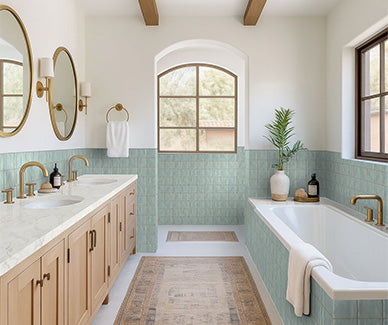


























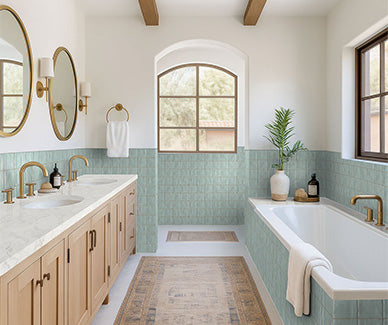























Bathroom with green tiled wall, shelves, and plantsLuxury bathroom tile

LUXURY BATHROOM TILE

DESIGNED TO ELEVATE YOUR PERSONAL SANCTUARY

MATERIALS TO MATCH YOUR VISION

GLASS TILE
PORCELAIN TILE
CERAMIC TILE
STONE TILE

CURATED BY SPACE

Modern freestanding bathtub with a sleek faucet in a bathroom setting.Modern freestanding bathtub with a sleek faucet in a bathroom setting.

TRADE & COMMERCIAL

Designed for professionals who expect more. Premium materials, expert support.
INSTALL WITH CONFIDENCE
Beyond the tile, everything you need to finish the job beautifully. Shop adhesives, grout, and installation tools selected to make your bathroom renovation as seamless as the final result.

CREATE YOUR HAVEN, SHOP OUR LOOKS

WHY AQUABLU BATHROOM TILE

A great bathroom tile does more than cover a surface. It sets the mood every time you walk in. At AquaBlu, we curate our bathroom tile collection with that resort day feeling in mind, natural stone, hand-set mosaics, and clean modern finishes chosen to bring the calm of a spa retreat into your everyday routine.

From shower walls to floors to statement accent pieces, our tile is organized by color and material so you can shop the way you actually design. Cool blues and greens for a coastal escape. Warm neutrals for a grounded, timeless look. Bold pattern for a bathroom that feels like the best room in the house.

Below, find answers to the questions we hear most from customers planning their next bathroom project.

BATHROOM TILE QUESTIONS, ANSWERED

Porcelain and natural stone are the top choices for bathroom floors. Porcelain is dense, water-resistant, and incredibly durable, making it ideal for high-moisture, high-traffic areas. Natural stone like travertine or slate adds organic texture and a spa-like feel, though it does require sealing. For a bathroom that looks and feels like a luxury retreat, a matte or honed finish helps with slip resistance without sacrificing style.

Start with how you want the space to feel. Light, large-format tiles make a small bathroom feel open and airy. Mosaic tiles add texture and visual depth, especially on shower walls or as an accent. Consider the finish (matte vs. glossy), the scale of the pattern relative to the room size, and how much maintenance you're willing to do. The right tile does double duty: it performs well and sets the whole mood of the room.

Absolutely. Glass tiles are one of the most popular choices for bathrooms, and for good reason. They reflect light beautifully, resist moisture and mold, and create that luminous, resort-quality look that makes a bathroom feel like more than just a functional space. They work especially well on shower walls, as backsplashes, and as accent features.

Glass tiles are relatively easy to maintain. A soft microfiber cloth and a non-abrasive, streak-free cleaner is all you need for routine cleaning. Avoid harsh scrubbers or acidic cleaners, which can dull the surface. For hard water spots, a diluted white vinegar solution works well. Because glass is non-porous, it does not harbor mold or bacteria the way grout-heavy surfaces can, which makes upkeep much simpler over time.

Glass tiles can be used on bathroom floors, but it requires some planning. Standard glass tiles can be slippery when wet, so they are best used in combination with textured or slip-resistant glass tiles specifically rated for floor use. Most designers recommend reserving glass tiles for walls and shower surrounds, where they really shine, and pairing them with porcelain or stone on the floor for both safety and contrast.

It depends on the look you are going for. Smaller mosaic tiles (1x1 or 2x2 inch) create rich texture and are great for shower floors and curved surfaces. Medium subway-style glass tiles (3x6 or 4x12 inch) give a clean, modern feel and work well on full shower walls. Larger format glass tiles (4x4 and up) feel more contemporary and minimalist. In general, smaller tiles add depth and detail while larger tiles make a space feel more expansive.

Glass tile installation requires a bit more precision than standard ceramic or porcelain. You'll need a white polymer-modified thinset (avoid gray, as it can show through the glass), a notched trowel, and tile spacers to keep grout lines consistent. Back-butter each tile for better adhesion. Use a wet saw with a glass-rated blade for cuts. Because glass is transparent or translucent, any uneven application of thinset will show, so a smooth, even bed is key. For large installations, professional installation is worth considering.

Yes, generally. Glass tiles tend to cost more than standard ceramic and are often comparable to or slightly above mid-range porcelain. The price reflects the manufacturing process, the visual quality, and the longevity of the material. That said, because glass tiles are most often used as accents or in targeted areas (a shower surround, a feature wall), the total material cost for a project is usually manageable. Think of it as an investment in the look of the space rather than a whole-room expense.

Glass tiles bring a combination of beauty and practicality that few other materials match. They are non-porous, so they resist moisture, mold, and staining. They reflect light in a way that makes any space feel brighter and more open. They are available in an enormous range of colors, sizes, and finishes, from sea glass blues to sleek charcoals. And because they do not fade or absorb color over time, they stay vibrant for years. In short, they deliver that elevated, spa-like aesthetic while holding up to daily use.