
























































Subway Tile vs. Mosaic Tile: Which One Fits Your Bathroom?

 Choosing tile for a bathroom is about much more than selecting a color. The shape, scale, material, finish, pattern, and installation format can all influence how the room looks and functions. Two of the most versatile choices are traditional subway-style tile and mosaic tile, and each brings a very different design experience to a space.
Rectangular wall tile can create clean lines, a timeless appearance, and a sense of visual order. Mosaic tile, by comparison, can introduce intricate patterns, smaller details, and greater visual movement. Neither approach is universally better. The right option depends on the size of the bathroom, the architectural style, where the material will be installed, and the atmosphere you want to create.
Understanding the differences between the two can make it easier to design a bathroom that feels cohesive, intentional, and suited to your home.
Featured Subway Tile: Marrakech Ocean 2" x 8" Porcelain Tile

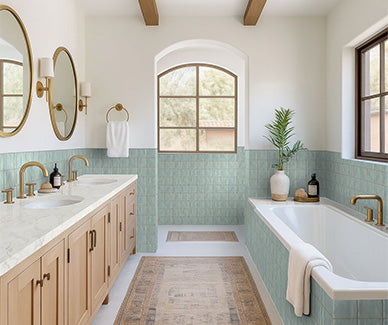
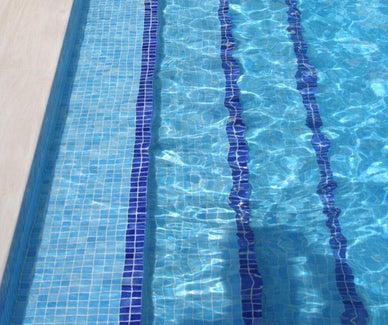
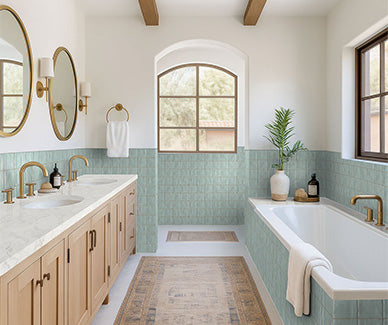
The Marrakech Ocean 2" x 8" Porcelain Tile offers a fresh take on the classic rectangular bathroom tile by combining an elongated 2" x 8" format with a Zellige-inspired appearance. AquaBlu describes the Marrakech Series as being inspired by Moroccan tilework, with subtle surface variation and texture intended to capture the visual character of hand-glazed ceramic while providing the performance associated with porcelain.
The Ocean color gives the material a relaxed, coastal personality that can work beautifully in bathrooms designed around blue, aqua, white, cream, or natural tones. Its glossy finish allows the surface to interact with light, while intentional variation keeps the installation from looking overly uniform. AquaBlu lists the tile as frost proof and suitable for pool applications, with the broader collection also intended for bathroom showers, kitchens, spas, and outdoor living areas.
The individual pieces are 2" x 8" and supplied as loose pieces rather than mesh-mounted sheets. Each box contains 50 pieces and covers approximately 5.17 square feet. The listed thickness is 9.5mm.
For a bathroom, the elongated format provides considerable layout flexibility. A traditional running-bond arrangement can create a familiar look, while a vertical layout can emphasize ceiling height. A stacked configuration offers a more contemporary appearance with strong horizontal or vertical lines.
The intentional variation is particularly useful for homeowners who want a handmade-inspired aesthetic without moving entirely into a rustic design. Marrakech Ocean can serve as a complete wall surface or work as an accent surrounding a bathtub, vanity, or shower.
Its combination of porcelain construction, glossy finish, dimensional character, and coastal-inspired color makes it an appealing choice for bathrooms where you want classic geometry with considerably more personality.
Featured Mosaic Tile: Highland Bristol 3/8" Glass Tile

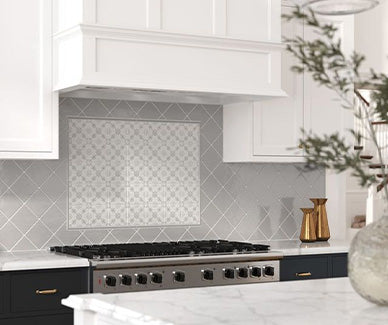
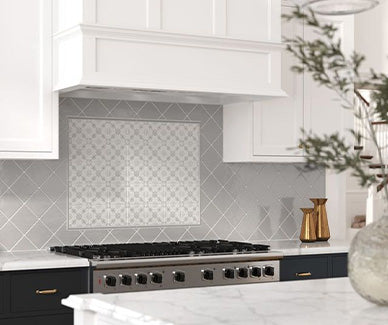
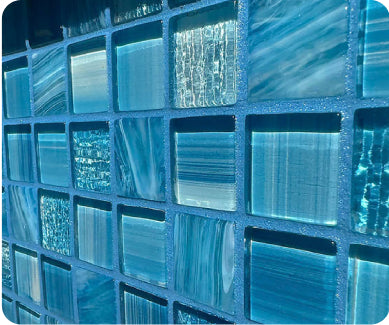
The Highland Bristol 3/8" Glass Tile takes a very different approach to bathroom design. Rather than relying on an elongated rectangular format, it uses a small 3/8" mosaic chip to create a structured geometric surface. The product is part of AquaBlu's Avora recycled glass collection and features a contemporary interpretation of the classic plaid pattern.
Its matte finish gives the surface a refined, understated appearance, while the patterned composition provides visual interest. AquaBlu describes the Highland Series as having a soft neutral palette designed to coordinate with materials such as stone, wood, and concrete, which makes it especially adaptable to modern bathroom interiors.
The product is supplied in a 15" x 15" mosaic format and is mesh mounted, making it easier to handle as a larger sheet during installation. Each box covers approximately 15.63 square feet, contains 10 pieces, and the material has a listed thickness of 6.35mm. AquaBlu currently identifies it as suitable for floor application, pool application, and use in frost-prone environments.
In a bathroom, Highland Bristol can make an excellent feature surface behind a vanity, within a shower, or across an entire accent wall. Its graphic pattern can give a relatively neutral color palette much more depth without requiring bright or highly saturated colors.
It is also a strong choice for designers who want something more distinctive than a traditional rectangular layout. The recycled glass construction adds another layer of appeal for projects where material character and design are equally important.
Because of its small format and mesh-mounted construction, it can also work well around architectural details and areas where a larger piece would be difficult to position cleanly. The result is a bathroom surface that feels carefully designed rather than purely functional.
What Defines Subway-Style Tile?
Subway-style tile is generally recognized by its rectangular shape and relatively clean, simple geometry. The classic version is associated with a horizontal rectangular format, although today's interpretations come in many colors, sizes, finishes, and materials.
A larger rectangular format can make a wall feel orderly and streamlined. Depending on how it is installed, it can also influence how the room is perceived. A horizontal layout may emphasize width, while a vertical arrangement can draw the eye upward and make a wall feel taller.
This versatility makes rectangular tile a reliable choice for bathroom walls, shower surrounds, tub walls, backsplashes, and other areas where a clean architectural backdrop is desired.
The style does not have to look plain. Handmade-inspired surfaces, varied colors, glossy finishes, unusual grout combinations, and decorative patterns can all give a rectangular tile a more distinctive personality.
What Makes Mosaic Tile Different?
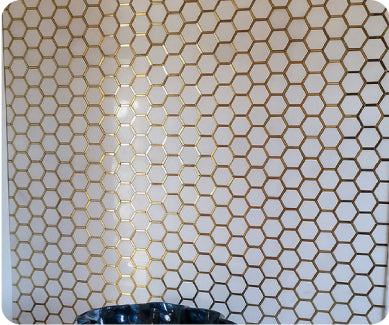
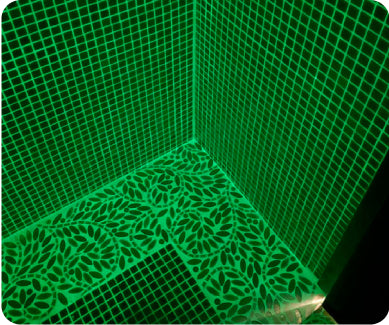
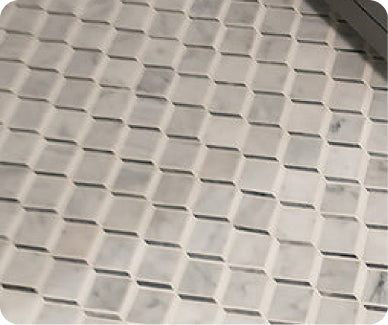
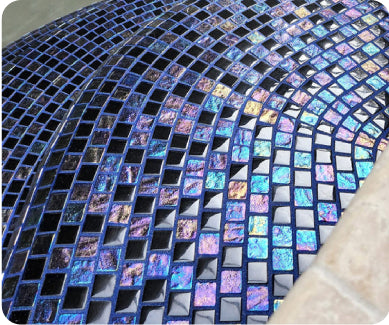
Mosaic tile is defined primarily by its smaller individual pieces and the way they are assembled into a larger pattern or design. Pieces may be square, rectangular, round, geometric, or highly decorative, and they are often supplied on mesh-mounted sheets.
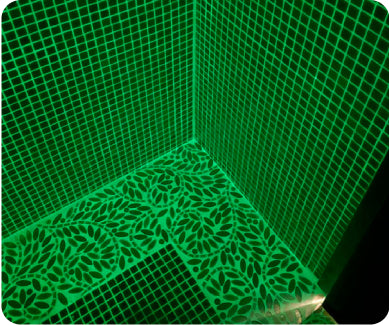
The smaller scale creates opportunities for more intricate patterns and greater visual complexity. Mosaics can be used to create borders, feature walls, shower floors, niches, backsplashes, or entire surfaces.
Because individual pieces are relatively small, mosaics can also adapt well to curved or irregular areas. This makes them useful in spaces where conventional large-format tile can be more difficult to lay out.
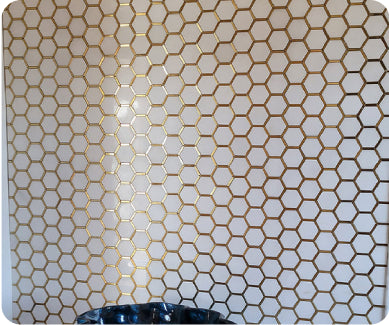
Mosaic tile can be subtle or dramatic. A neutral geometric design can add texture without overwhelming a room, while a bold pattern can become the central feature of the bathroom.
Appearance And Design Flexibility
When comparing the two styles, visual impact is one of the biggest differences.
Rectangular tile tends to create broader areas of uninterrupted color. Even when the pieces have subtle variations, the larger format allows the overall wall to read as a more continuous surface.
Mosaics break that surface into many smaller visual elements. The additional grout lines and repeating pattern create more texture and movement.
This does not mean rectangular tile is less decorative. A Zellige-inspired rectangular product such as Marrakech Ocean can combine a familiar elongated shape with intentional variation and a handmade appearance, creating considerably more character than a basic subway tile. AquaBlu describes the Marrakech Series as having a Zellige-look surface with subtle variation and texture.
Mosaics, meanwhile, can introduce pattern directly into the surface. The Highland Bristol design, for example, uses a contemporary interpretation of a classic plaid pattern to give a bathroom a structured decorative element.
Which Is Better For A Small Bathroom?
Both can work beautifully in smaller bathrooms, but they achieve different effects.
A rectangular tile with a simple color and clean layout can help a compact bathroom feel organized and spacious. Extending the same tile across several walls can create visual continuity, reducing the number of competing surfaces.
Mosaics can also work extremely well in smaller spaces because they add personality without requiring a large surface. A decorative mosaic behind the vanity or inside a shower niche can give the room a custom appearance without covering every wall in pattern.
For a particularly small bathroom, one useful strategy is to establish a relatively simple primary surface and reserve mosaic tile for an accent area. This creates contrast while keeping the overall room visually balanced.
Which Is Better For Shower Walls?
Rectangular tile is a natural choice for shower walls because it can provide broad, consistent coverage and a straightforward layout. A 2" x 8" format can create a classic running-bond arrangement, stacked installation, or even a vertical pattern.
Mosaic tile can make a shower feel more decorative. A patterned surface can turn the shower wall into a focal point, particularly when paired with simple flooring and fixtures.
Both materials can work well in wet areas when the specific product is rated for the application and installed using an appropriate waterproofing and setting system.
AquaBlu lists Marrakech Ocean for bathroom shower applications and pool use, while its specifications identify the product as frost proof and glossy.
Which Is Better For Shower Floors?
This is an area where the choice requires more attention to the specific product.
Small-format tile can provide more grout joints and smaller individual pieces, which can help installers follow the slope of a shower floor toward the drain. However, suitability depends on the specific tile, finish, slip characteristics, and installation requirements.
Mosaic products can be particularly useful when the format and product specifications are appropriate for flooring. Highland Bristol, for example, is currently listed by AquaBlu as suitable for floor application as well as pool application. Its small 3/8" chip size and mesh-mounted format create a highly detailed surface.
The important point is not to assume that every mosaic or every rectangular tile is appropriate for the same flooring application. Always verify the manufacturer's specifications before choosing a product for a shower floor.
Installation Considerations
Installation is another meaningful difference.
A conventional rectangular tile is typically installed piece by piece, which can make spacing and alignment especially important. Longer pieces can make variations in the substrate or installation more noticeable because even small inconsistencies can affect the visual line across a wall.
Mosaic sheets can simplify some aspects of layout because multiple pieces are mounted together. The mesh backing helps maintain spacing and allows an installer to cover a larger area at once.
However, mosaics can also require careful attention to sheet-to-sheet transitions. If the sheets are not aligned properly, repeating patterns can become obvious.
The substrate should be properly prepared for either format. Waterproofing, adhesive selection, grout choice, movement accommodation, and layout planning all contribute to a successful finished installation.
Grout Lines And Maintenance
The amount of grout visible in a finished bathroom can vary dramatically between the two styles.
Rectangular tile generally produces fewer grout joints per square foot, particularly when compared with very small mosaics. This can create a cleaner visual appearance and may reduce the amount of grout surface that needs routine cleaning.
Mosaics naturally involve more joints, especially when the individual pieces are extremely small. That additional grout can become an important part of the design, but it also means there is more joint surface to maintain.
For bathrooms exposed to substantial moisture, cleaning products, or frequent use, grout selection matters. The right formulation can help with stain resistance and long-term appearance.
Cost Considerations
The overall cost of a bathroom installation depends on far more than the price of the tile itself.
Material pricing can vary considerably according to the tile's material, manufacturing process, finish, pattern, and size. Installation labor can also differ depending on the complexity of the layout.
A straightforward rectangular tile may involve a relatively simple repeating pattern, while an intricate mosaic can require more time for alignment and cutting.
That does not automatically make mosaics more expensive or rectangular tile less expensive. Premium rectangular tile can command a substantial price, while an affordable mosaic may be economical depending on the project.
The best way to evaluate the overall budget is to consider material cost, waste, installation labor, setting materials, grout, waterproofing, and the complexity of the selected design.
Pros And Cons Of Rectangular Tile
Rectangular tile offers several practical and aesthetic advantages. Its clean geometry works across many design styles, from traditional to contemporary, and the larger pieces generally create fewer grout joints. Multiple installation patterns can also change the character of the same product.
Another advantage is versatility. A rectangular wall tile can serve as a quiet backdrop or become more decorative through color, texture, finish, and variation.
The primary limitation is that simple geometry may not provide enough visual interest for homeowners who want a highly decorative bathroom. Large, straight lines can also make substrate imperfections more noticeable.
Pros And Cons Of Mosaic Tile
Mosaic tile provides enormous design flexibility. Smaller pieces can create intricate patterns, borders, focal points, and custom-looking installations. They can also adapt to curved areas and complicated surfaces more easily than many larger formats.
The tradeoff is that the additional grout joints create more visual activity and potentially more maintenance. Patterned mosaics can also require greater installation precision, particularly when aligning sheets and repeating designs.
Mosaic is often best when it is treated as a design element rather than simply a surface covering.
Can You Combine Both Styles?
Absolutely. Combining rectangular tile with mosaic can create one of the most balanced bathroom designs.
For example, a clean 2" x 8" tile can cover the main shower walls while a mosaic is used inside the niche. Another approach is to use rectangular tile around the vanity and introduce a patterned mosaic behind the mirror.
The contrast in scale helps define different areas of the room without requiring completely different color palettes.
You can also use the same color family in both materials. This allows the difference in shape and scale to provide the visual contrast while keeping the bathroom cohesive.
How To Make The Final Decision
Start with the atmosphere you want the bathroom to have.
For a calm, streamlined space, rectangular tile may provide the clean foundation you are looking for. For a more decorative room, mosaic can introduce pattern and personality.
Then consider where the material will be installed. A shower wall, shower floor, vanity backsplash, niche, and accent wall each have different practical considerations.
Think about maintenance, grout visibility, installation complexity, and the relationship between the tile and the rest of the room.
Finally, order samples. Viewing the actual material alongside your countertop, cabinetry, fixtures, paint, flooring, and lighting is one of the best ways to understand whether it truly fits the space.
Final Thoughts
The choice between rectangular wall tile and mosaic tile ultimately comes down to the balance you want between simplicity, pattern, texture, and visual detail.
A classic elongated format can provide a clean architectural backdrop, while mosaic introduces smaller-scale detail and often makes a stronger decorative statement. Neither approach has to be limited to one design style. Modern colors can make rectangular tile feel contemporary, while a muted mosaic can be surprisingly subtle.
Marrakech Ocean demonstrates how a familiar 2" x 8" shape can be transformed through color variation, texture, and a glossy Zellige-inspired finish. Highland Bristol takes the opposite approach, using tiny recycled glass pieces and a structured pattern to create a distinctly decorative surface.
The best bathroom design is the one that works with the architecture, the practical demands of the space, and the overall aesthetic you want to create.
FAQ
Is Rectangular Tile Or Mosaic Better For A Bathroom?
Neither is automatically better. Rectangular tile offers clean lines and broad design versatility, while mosaic provides more pattern, detail, and opportunities for decorative accents.
Can Mosaic Tile Be Used On A Shower Floor?
Some mosaic products are suitable for flooring, but the specific product must be checked for the intended application and performance requirements. Highland Bristol is currently listed as suitable for floor application.
Can A 2" x 8" Tile Be Used In A Shower?
Certain products can be used on shower walls. Marrakech Ocean is specifically listed for bathroom showers, although proper waterproofing and installation practices are essential.
Is Glass Tile A Good Choice For Bathrooms?
Glass can be an excellent bathroom material when the specific product is intended for the application. It can provide distinctive color, texture, and reflective or matte effects depending on the finish.
Which Style Uses More Grout?
Mosaic generally uses more grout joints because it consists of many smaller pieces. Rectangular tile typically creates a more open visual field with fewer joints.
Can You Mix Mosaic And Rectangular Tile?
Yes. Combining the two can create contrast in scale and pattern while maintaining a cohesive bathroom design, especially when the materials share related colors or finishes.
Should I Order Samples Before Choosing?
Yes. Samples allow you to see the actual color, finish, texture, and scale alongside your bathroom's lighting and other materials, which can be very different from viewing product photography alone.
