










































Putting Green Turf: Bring The Fairway To Your Backyard

For golfers who enjoy practicing at home, a backyard putting green can turn an ordinary outdoor space into a personal practice facility. Instead of driving to a golf course or waiting for an available practice area, homeowners can step outside and work on distance control, alignment, pace, and consistency whenever they have a few minutes to spare.
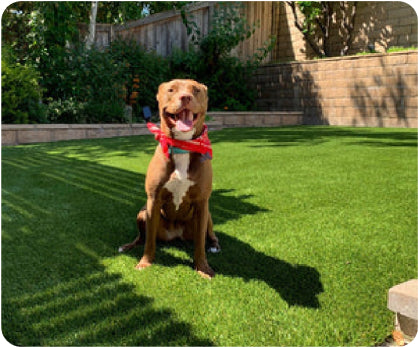
Synthetic grass has become an increasingly practical option for creating these spaces. Modern turf can deliver a consistent playing surface while eliminating many of the challenges associated with maintaining natural grass. It can also be incorporated into a variety of landscape designs, from compact practice areas to elaborate backyard golf retreats.
Professional facilities can benefit from the same qualities. Training centers, sports facilities, resorts, golf clubs, and commercial properties can use synthetic putting surfaces to create dependable practice areas that remain attractive and playable through changing weather conditions.
The key is selecting turf that is specifically designed for putting rather than choosing a conventional landscape product and expecting it to perform the same way.
Product Spotlight: Evergrass Putting Green Turf 78

Evergrass Putting Green Turf 78 is designed for homeowners and commercial operators who want a dedicated synthetic surface for practicing the short game. AquaBlu describes it as a professional-quality putting product focused on realistic ball roll, durability, drainage, and reduced maintenance.
The turf is sold in 15-foot-wide rolls, with the currently listed product configuration covering 1,500 square feet in a 100-foot roll. AquaBlu also notes that custom cuts are available.
Its construction includes polyethylene yarn, dual polypropylene backing, a 0.63-inch pile height, a 50-ounce face weight, and a total product weight of 78 ounces per square yard. The product also has a 3/16-inch tuft gauge.
One of its most notable specifications is drainage performance. The product is currently listed with a drainage rate of 140 inches per hour, which is important for outdoor installations exposed to significant rainfall. UV-resistant fibers are also designed to help the turf maintain its color under prolonged sun exposure.
For homeowners, the product can turn part of a backyard into a dedicated practice area without the watering and mowing associated with maintaining a natural putting surface. For commercial applications, the 10-year commercial warranty provides a longer-term framework for facilities expecting regular use. Residential installations are supported by a limited lifetime warranty according to the current product listing.
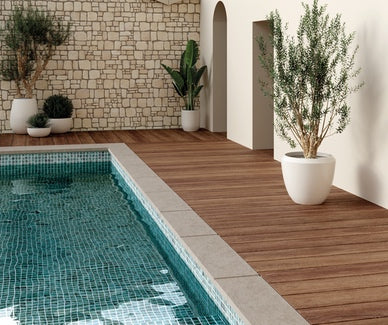
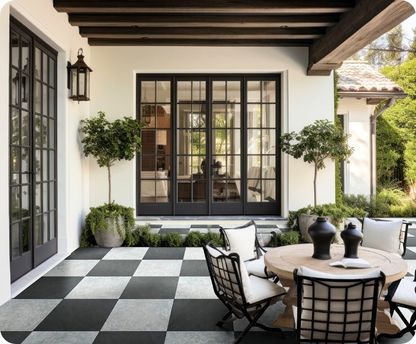
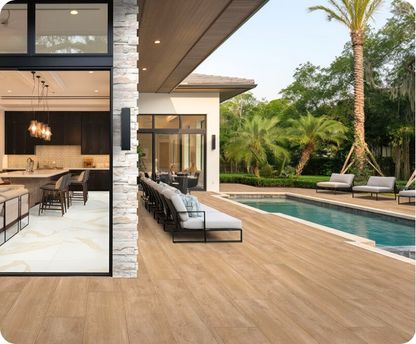
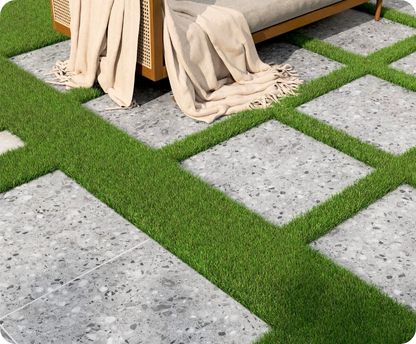
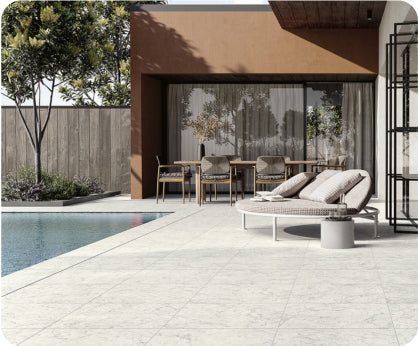
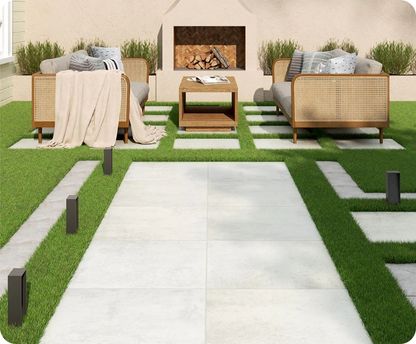
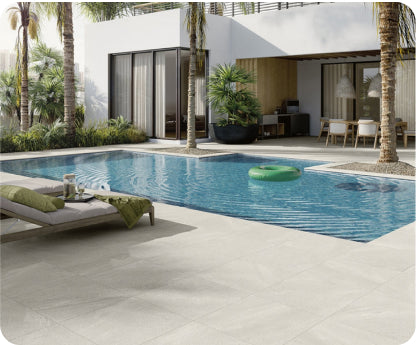
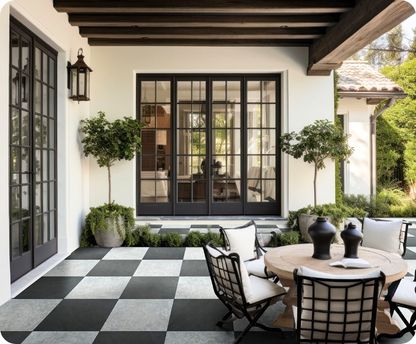
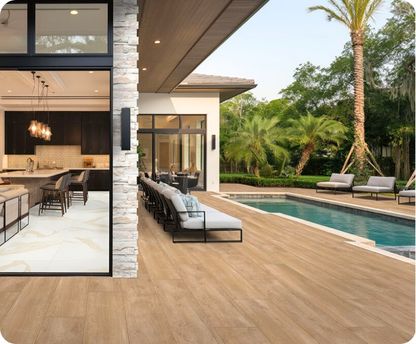
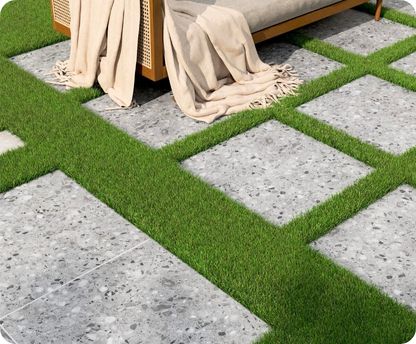
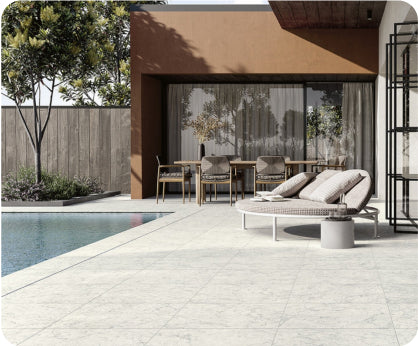
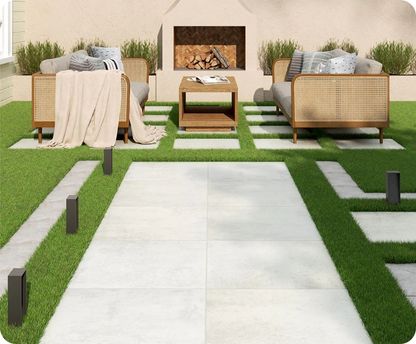
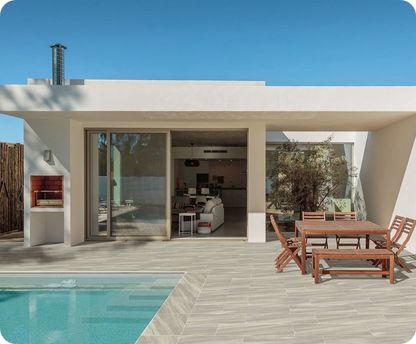
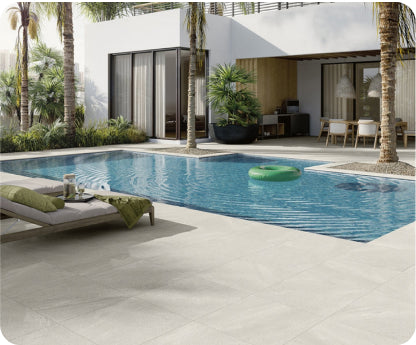
Beyond the playing surface itself, the material can be incorporated into a larger landscape design. AquaBlu specifically suggests pairing the turf with outdoor porcelain pavers, which can create a polished transition between the practice area and surrounding hardscape.
What Makes Putting Green Turf Different?
Not all artificial grass is designed for the same purpose. Landscape turf is primarily intended to mimic the appearance and feel of natural lawn grass, while a putting surface needs to provide predictable ball behavior.
For golfers, consistency is critical. The ball should roll smoothly across the surface without unexpected resistance or significant changes in speed caused by uneven growth, bare spots, or inconsistent mowing.
Dedicated putting turf is manufactured with characteristics intended to create a shorter, more controlled playing surface. Pile height, fiber construction, backing, density, and overall installation all contribute to how the finished green performs.
This makes product selection especially important. A visually attractive turf product may not provide the playing characteristics a golfer expects.
Benefits For Residential Putting Greens
One of the biggest advantages of a synthetic practice green is convenience.
Natural grass requires ongoing attention. Depending on the grass type and climate, maintaining a high-quality putting surface can involve mowing, watering, fertilizing, pest management, aeration, and other lawn-care practices.
Synthetic turf eliminates many of these routine requirements. AquaBlu's putting green collection highlights the lack of watering, mowing, and chemical treatments as major advantages, while also promoting year-round appearance and playability.
For homeowners, that can mean more time practicing and less time maintaining the surface.
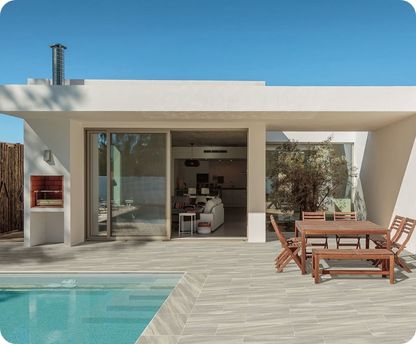
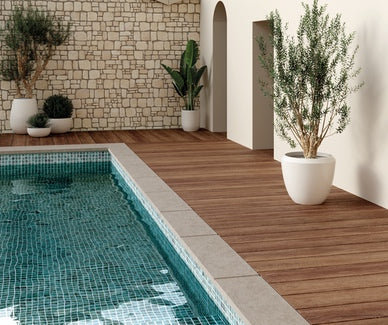
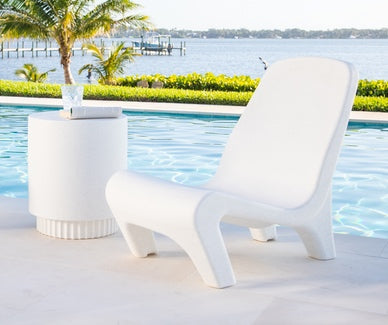
A home green can also be designed around the way the household actually uses its backyard. It can be a compact area for daily practice, a larger entertainment feature, or part of a complete outdoor living environment with seating, landscaping, pavers, lighting, and a pool.
A Practice Space Available Anytime
Accessibility is another major benefit.
A golfer may only have 10 or 15 minutes available before work, after dinner, or between other activities. Having a putting area at home removes much of the effort involved in getting to a golf facility.
Frequent short practice sessions can also make the space more useful than an occasional trip to a distant practice green. Homeowners can work on specific aspects of their putting routine without turning every practice session into a major outing.
For families, the space can also become part of the backyard experience. Children and guests may use it recreationally, while more experienced golfers can use it for focused practice.
Designing A Residential Putting Green
A backyard green does not have to be enormous to be useful.
The available yard space should determine the overall footprint, but the design can include different distances and angles to create a more interesting practice experience. Curves, subtle breaks, multiple cup locations, and fringe areas can all make the surface more versatile.
Think about how the golfer will approach the green. A useful practice area can include short putts, longer attempts, straight-line practice, and different directions of approach.
Surrounding materials can also add to the finished design. Porcelain pavers, decorative stone, planting beds, seating, and landscape lighting can frame the green and make it feel like an intentional part of the property rather than an isolated patch of artificial grass.
Drainage Is A Major Consideration
Outdoor golf surfaces need to handle rain efficiently.
Standing water can interfere with play and create problems for the surrounding landscape. Proper site grading and drainage should therefore be addressed before the turf is installed.
The Evergrass Putting Green Turf 78 is currently listed with a drainage rate of 140 inches per hour, giving it a high-capacity drainage specification for outdoor applications.
The turf itself, however, is only one part of the drainage system. The underlying base, grading, and drainage design are equally important.
A properly prepared base allows water to move away from the surface rather than becoming trapped underneath it. This is one reason professional installation can be valuable for larger or more complicated projects.
Choosing The Right Pile Height
Pile height is one of the specifications worth examining when shopping.
Putting surfaces generally use shorter fibers than conventional landscape turf because shorter blades are better suited to controlled ball roll.
The Evergrass Putting Green Turf 78 has a listed pile height of 0.63 inches. It also has a 3/16-inch tuft gauge and a 50-ounce face weight per square yard.
These specifications provide useful information about the product's construction, but they should not be evaluated in isolation. The combination of fiber type, backing, density, installation, and infill can all influence the final playing characteristics.
Understanding Turf Backing
The backing is another important part of the product because it supports the synthetic fibers.
Evergrass Putting Green Turf 78 uses a dual polypropylene primary backing. AquaBlu explains that the dual backing system is designed to resist stretching and shrinking, with a polyurethane coating used to secure the synthetic fibers in place.
This construction can contribute to the product's stability over time, particularly in outdoor environments where temperature changes and regular use can place stress on the material.
When shopping, look beyond the color and surface appearance. Understanding how the turf is constructed can help you distinguish a purpose-built product from lower-performance alternatives.
Synthetic Grass For Professional Facilities
Residential putting greens are only one application. Commercial and professional environments can also use synthetic surfaces for practice and recreation.
Golf academies, resorts, hotels, sports facilities, clubhouses, retirement communities, and other hospitality properties can incorporate practice greens into larger outdoor spaces.
For commercial properties, consistency and maintenance can be particularly important. A practice area that needs to remain attractive and available to guests may benefit from a surface that does not depend on seasonal grass growth.
Evergrass Putting Green Turf 78 carries a listed 10-year commercial warranty, according to AquaBlu's current product specifications.
AquaBlu also describes the product as suitable for commercial and residential putting greens, sports facilities, pathways, playgrounds, landscapes, and other applications.
Durability For Frequent Use
A practice green can see considerable activity over time.
Golfers may repeatedly walk across the same areas, practice from similar positions, retrieve balls, move training equipment, and spend extended periods on the surface.
The Evergrass product is constructed with synthetic polyethylene yarn and has a listed total product weight of 78 ounces per square yard. Its UV-resistant fibers are designed to retain their color under sun exposure.
For outdoor installations, UV performance matters because prolonged sunlight can gradually affect lower-quality materials. Choosing a product designed for sustained outdoor exposure can help preserve its appearance over time.
Year-Round Usability
Weather is one of the biggest differences between synthetic and natural grass.
Natural putting surfaces can change with rain, heat, drought, cold, seasonal growth patterns, and maintenance conditions. Synthetic turf remains visually consistent without depending on the health of living grass.
That does not make it completely unaffected by weather. Surface temperatures, debris, heavy rainfall, and other environmental conditions can still influence how an outdoor practice space is used.
Proper drainage, routine cleaning, and appropriate installation remain important for keeping the area ready for play.
DIY Installation Or Professional Installation?
Artificial turf can be installed by experienced DIY homeowners, but putting greens require more precision than a basic lawn replacement.
AquaBlu notes that homeowners with basic landscaping tools and suitable skills may install artificial turf themselves, while also recommending professional installation for the best results.
The base preparation is particularly important for a putting area because the quality of the underlying surface can affect the finished roll. Uneven areas, inadequate compaction, poor drainage, and improper grading can all affect performance.
For homeowners seeking a highly customized green with breaks, contours, multiple holes, or professional-style features, experienced installers can also help develop a more sophisticated design.
Maintenance Is Minimal, Not Nonexistent
Synthetic turf is generally much easier to maintain than natural grass, but it should not simply be ignored after installation.
Leaves, dirt, dust, and other debris should be removed regularly. Light brushing can help keep fibers standing properly, while prompt cleanup can prevent organic material from accumulating.
Heavy rain can also carry debris onto the surface. Keeping nearby trees and planting areas maintained can reduce the amount of material that ends up on the green.
The exact care routine should follow the manufacturer's recommendations, particularly if infill, specialized materials, or additional components are incorporated into the installation.
Consider The Fringe Around The Green
One detail that can make a backyard green feel considerably more realistic is the transition between the putting surface and the surrounding landscape.
A fringe area can create a visual separation between the short playing surface and ordinary landscape grass or hardscape. It can also give golfers another area from which to practice different shots.
Some artificial turf collections include separate landscape products that can be coordinated with putting surfaces. AquaBlu's broader Evergrass collection includes landscape varieties in several different weights and styles, allowing a project to incorporate multiple turf types where appropriate.
Using different turf characteristics for different parts of the yard can help the practice area feel more integrated with the overall landscape.
Making A Backyard Golf Retreat
A putting green can become much more than a place to practice.
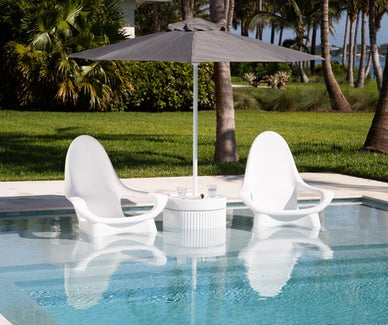
Combine it with comfortable outdoor furniture, a shaded seating area, outdoor lighting, a fire feature, a pool, or a patio to create a complete recreation space. A well-planned installation can serve golfers while also providing a unique entertainment feature for friends and family.
This is especially appealing for homeowners who want to maximize the use of their outdoor space. Instead of dedicating the entire yard to lawn maintenance, the landscape can be divided into purposeful areas for relaxing, entertaining, swimming, and recreation.
Final Thoughts
A well-designed putting green can bring some of the enjoyment of the golf course directly into the backyard while giving homeowners a practical and visually appealing outdoor feature.
Synthetic turf is particularly valuable because it provides a consistent surface without many of the recurring maintenance demands associated with natural grass. Modern products can also be designed for durability, drainage, UV exposure, and frequent use, making them suitable for everything from private residential practice spaces to commercial facilities.
When shopping, pay close attention to pile height, fiber type, backing construction, drainage, warranty coverage, overall weight, and intended application. Just as important, plan the base and drainage system carefully because installation quality plays a major role in how the finished surface performs.
Whether the goal is to practice every day, create a unique backyard amenity, or provide a dedicated recreational feature for guests, the right synthetic putting surface can transform unused outdoor space into a place that gets used again and again.
FAQ
Is Synthetic Turf Good For A Backyard Putting Green?
Yes. Putting-specific artificial turf is designed to provide a consistent surface for practice while eliminating many of the maintenance demands associated with natural grass.
Does Artificial Turf Need To Be Watered?
No. One of the primary advantages of synthetic grass is that it does not require routine irrigation to remain green and usable.
How Long Can Putting Green Turf Last?
Longevity depends on product quality, installation, usage, climate, and maintenance. Evergrass Putting Green Turf 78 currently carries a limited lifetime residential warranty and a 10-year commercial warranty.
Can I Install A Putting Green Myself?
DIY installation is possible for homeowners with the appropriate tools and experience, but professional installation is recommended for optimal results, particularly for complex designs.
Does Putting Green Turf Drain Water?
Yes. Properly designed synthetic turf systems are intended to allow water to move through the surface. The Evergrass Putting Green Turf 78 is currently listed with a drainage rate of 140 inches per hour.
Can Synthetic Putting Turf Be Used For Commercial Projects?
Yes. Putting-specific turf can be used at resorts, sports facilities, golf training areas, hospitality properties, and other commercial locations. Evergrass Putting Green Turf 78 is currently marketed for both residential and commercial applications.
