Buyer's Guide: In-Pool Furniture for 10" - 12" Water Depth
A shallow pool ledge can be one of the most enjoyable areas of a backyard. It offers enough water to create a refreshing place to sit or lounge without requiring swimmers to enter the deeper portions of the pool. With the right furniture, this space can become a comfortable destination for reading, relaxing, socializing, or simply enjoying the water on a warm afternoon.
Choosing furniture for a 10 inch to 12 inch water depth, however, requires more consideration than simply finding an attractive chair or lounger. The dimensions, construction, materials, weight, stability, water compatibility, and intended use all matter.
Furniture designed specifically for shallow submerged areas needs to work with the pool's environment. It should complement the surrounding hardscape and waterline while providing a comfortable experience for the people using it.
This guide covers the most important factors to consider when shopping for furniture intended for shallow pool ledges and tanning shelves, from selecting the right style to understanding placement, maintenance, and long-term performance.
Understanding Shallow Pool Ledges
A shallow ledge is an area within a swimming pool where the water is considerably less deep than the main swimming area. These spaces are commonly incorporated into contemporary pool designs and may also be called tanning ledges, sun shelves, baja shelves, or shallow lounging areas.
The exact depth can vary considerably from one pool to another. A ledge measuring 10 to 12 inches deep provides enough water to partially surround furniture while still allowing users to sit, recline, or place their feet on the submerged surface.
This depth creates an opportunity for a different kind of pool experience. Instead of swimming laps or floating in deep water, people can remain partially immersed while relaxing in a more structured position.
The furniture selected for this area should be specifically suited to the available depth.
Why Depth Matters When Choosing Furniture
Water depth is one of the first measurements to confirm before purchasing submerged furniture.
A chair or lounger that is designed for a deeper shelf may not sit correctly on a shallow ledge. Conversely, furniture designed for a very shallow application may not provide the intended experience in deeper water.
Measure the actual depth of the finished ledge rather than relying solely on the dimensions shown in a pool plan. Finished surfaces, water levels, and construction details can affect the usable depth.
It is also worth remembering that water levels can fluctuate. Evaporation, splash-out, pool maintenance, and weather can cause the depth around the furniture to change temporarily.
The furniture should therefore be appropriate for the intended depth range rather than fitting one exact measurement with no margin.
Choosing Furniture Designed For The Pool
Not all outdoor furniture is suitable for submerged use.
A chair or lounger that works perfectly well beside a pool may not be designed to spend extended periods underwater. Pool water introduces a different set of environmental conditions, including moisture, chemicals, mineral exposure, and repeated wetting and drying.
Furniture intended specifically for submerged or partially submerged use should be evaluated according to the manufacturer's stated application.
This is particularly important for materials, hardware, finishes, cushions, and structural components.
A product's outdoor rating alone does not necessarily mean that it is appropriate for continuous contact with pool water.
In-Pool Chairs For Shallow Shelves
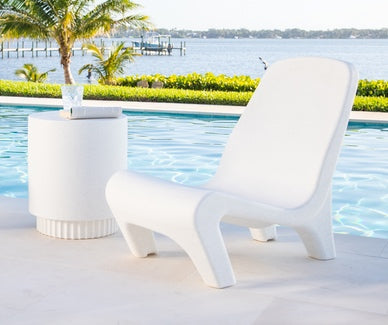
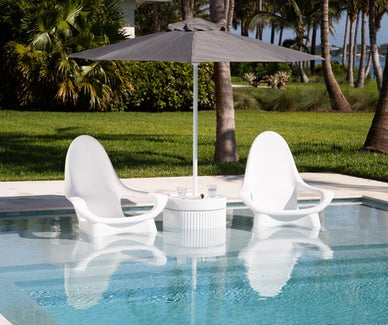
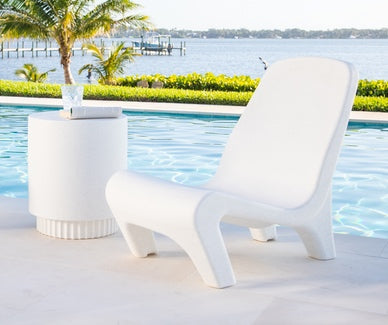
Chairs can be an excellent choice when the goal is to create a social space within the pool.
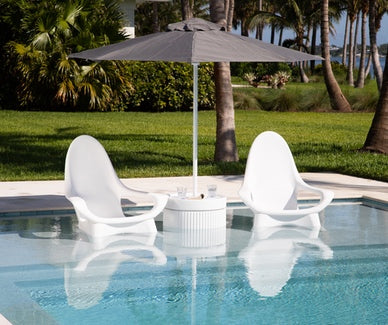
An in-pool chair allows the user to sit upright rather than fully recline. This can make it easier to talk with other people, enjoy a beverage, supervise children, or simply spend time in the water without swimming.
For a 10 inch to 12 inch shelf, look for a chair with dimensions that work comfortably within the available depth.
The seat height and overall profile are particularly important. A piece that is too tall may not provide the intended partially submerged experience.
A well-designed pool chair should feel stable while allowing enough water around the user to create a comfortable sense of immersion.
In-Pool Loungers For Relaxation
Loungers provide a different experience.
Instead of sitting upright, users can recline and stretch out across the shallow shelf. This makes them particularly attractive for sunbathing, reading, or relaxing in the water.
When evaluating a lounger, consider its overall length as well as its width. A long piece may extend beyond the ledge or interfere with steps, drains, or other pool features.
The angle of the backrest is also important. A completely flat surface may be comfortable for some activities, while an adjustable or angled back can provide more support for reading and conversation.
For a shallow pool environment, the lounger should be designed specifically around the depth and conditions of the ledge.
Considering Stability
Stability is essential for furniture placed in water.
A piece should remain secure when a person sits down, shifts position, or stands up. Movement in the pool can affect how furniture behaves, especially when the surface underneath is smooth.
The design should provide an appropriate footprint for the available ledge.
Weight can also play a role, although heavier is not automatically better. The manufacturer's recommendations should explain how the product is intended to be positioned and whether any additional securing method is necessary.
Avoid improvising with weights, anchors, or attachments that have not been approved by the manufacturer.
Material Selection Matters
The material used to construct pool furniture has a major impact on its performance.
Furniture intended for a pool environment may use materials selected for resistance to moisture, ultraviolet exposure, and chemical conditions.
Some designs use specialized composites, marine-grade materials, coated metals, concrete, or other materials engineered for exterior applications.
The important point is not simply to choose a material that looks attractive. The construction should be appropriate for prolonged exposure to the conditions in which the furniture will be used.
Always review the manufacturer's care instructions and application information before purchasing.
Think About Pool Chemicals
Swimming pool water contains chemicals that help maintain water quality. Chlorine, salt, balancing chemicals, and other treatment systems can expose submerged materials to conditions that differ from those found in ordinary outdoor environments.
Furniture intended for the pool should account for this exposure.
The manufacturer may specify acceptable water-treatment systems or provide instructions for rinsing and cleaning the furniture.
Following those instructions is important. Even durable materials can deteriorate prematurely when exposed to inappropriate chemicals or cleaning products.
Consider The Pool Finish
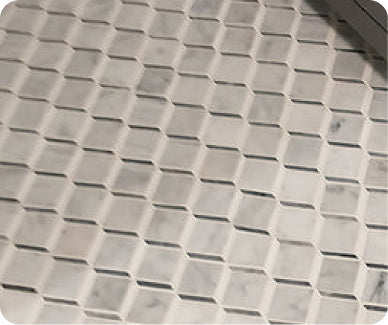
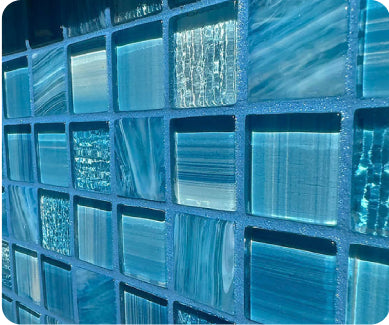
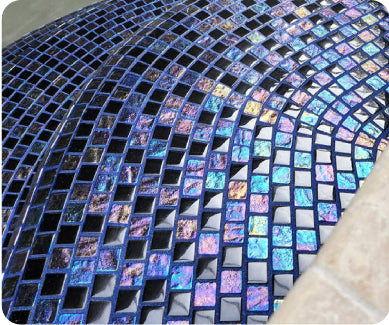
Furniture should coordinate with the pool's interior finish and surrounding tile.
A light-colored pool finish can create a bright, resort-inspired appearance. Darker finishes may create a more dramatic environment.
Furniture does not necessarily need to match the pool exactly. In many cases, contrast creates a more interesting composition.
For example, a white or light neutral chair can stand out beautifully against a darker pool interior. A darker piece can create a stronger architectural statement against pale stone or light-colored tile.
Think about the furniture as part of the overall pool design rather than an isolated purchase.
Measuring The Ledge Before You Buy
Take accurate measurements before ordering anything.
Measure the water depth from the finished surface of the ledge to the typical waterline. Then measure the usable length and width.
Also identify the locations of:
- Pool drains
- Return fittings
- Steps
- Handrails
- Water features
- Umbrella sleeves
- Raised edges
- Lighting fixtures
Furniture needs enough room around it for people to move comfortably.
A beautiful chair can quickly become impractical if it blocks a step or makes it difficult to enter and leave the pool.
Leave Enough Room Around Each Piece
A shallow shelf can feel crowded surprisingly quickly.
Rather than filling every available inch, leave space around furniture so users can move between pieces.
Spacing also helps preserve the visual openness of the pool.
If several chairs are being installed, consider how people will approach them. Someone should be able to sit down without climbing over another piece of furniture.
The same principle applies to loungers. Leave enough clearance for users to enter, exit, and reposition themselves.
Planning For Different Users
Think about how the furniture will actually be used.
If the ledge is primarily intended for adults who want to relax, deeper reclining furniture may make sense.
If it will be used by families, upright chairs may provide more flexibility.
For entertaining, a combination of chairs and loungers can create different zones. Some guests can sit upright and socialize while others relax nearby.
The best arrangement is the one that reflects the way people naturally use the pool.
Designing A Social Space
One of the advantages of shallow water furniture is that it can turn a tanning ledge into a social area.
Two or more chairs positioned near each other can create an in-water conversation space.
A small table may also be useful if the manufacturer specifically approves it for the intended environment.
When designing a social arrangement, consider sightlines. Chairs should face one another or orient toward the most attractive part of the backyard.
The goal is to make the shallow area feel like an intentional outdoor room rather than simply a section of the pool.
Creating A Relaxation Zone
For a more peaceful atmosphere, use fewer pieces and allow more space between them.
One or two loungers can create a private-feeling retreat even within a larger pool.
Positioning the loungers toward landscaping, a garden, or an attractive architectural feature can enhance the experience.
If the shelf receives significant sunlight, consider how shade will be provided. Some pool designs incorporate umbrellas or nearby shade structures.
Any umbrella or shade component should be selected specifically for compatibility with the pool and installed according to the manufacturer's requirements.
Comfort And Ergonomics
A pool chair or lounger should be comfortable enough for extended use.
Look at the angle of the back, the shape of the seat, and how the body is supported.
For loungers, the head and upper back area deserve particular attention. A poorly designed angle can become uncomfortable after only a short period.
For chairs, consider the height and depth of the seat as well as arm support.
The best design will make it easy to relax without requiring constant repositioning.
Considering Cushions And Upholstery
Cushions can increase comfort, but they also introduce additional maintenance considerations.
Not every outdoor cushion is suitable for continuous exposure to pool water.
If cushions are included with submerged furniture, verify that they are specifically designed for the intended application.
Consider how quickly they dry, how they should be cleaned, and whether they should be removed when the pool is not being used.
If cushions are not designed for submersion, do not assume that an outdoor-rated fabric is sufficient.
Maintenance Requirements
Even purpose-built pool furniture requires care.
Regularly inspect surfaces for debris, mineral buildup, discoloration, or other changes.
Rinse furniture according to the manufacturer's recommendations, particularly when residue has accumulated.
Avoid abrasive cleaning products unless they are specifically approved.
Hardware and joints should also be checked periodically. If the furniture includes moving parts, such as an adjustable backrest, follow the manufacturer's maintenance instructions.
Proper care can help preserve both appearance and performance.
Seasonal Considerations
Depending on the climate, homeowners may not use the pool throughout the year.
If furniture is removable, determine how it should be stored during extended periods when the pool is not being used.
Some products may be designed to remain outdoors year-round, while others may have specific storage requirements.
Cold temperatures can create additional considerations, especially in climates that experience freezing conditions.
Follow the manufacturer's guidance rather than assuming that every piece can remain submerged or exposed throughout the winter.
Safety Around Children
A shallow ledge can be an attractive area for children, but furniture changes how the space functions.
Chairs and loungers can create obstacles or affect how children move through the water.
Position furniture so that it does not block designated entry and exit points.
Parents and caregivers should also remember that shallow water is not inherently risk-free. Children should always be supervised around swimming pools.
Furniture should support safe use of the pool rather than encouraging assumptions about water depth or swimming ability.
Coordinating With The Rest Of The Backyard
The furniture should look appropriate alongside the entire outdoor environment.
Consider the pool coping, patio surface, landscaping, outdoor kitchen, fire features, lighting, and architectural finishes.
A contemporary pool may benefit from streamlined furniture with clean geometry.
A more organic landscape might pair well with rounded forms and softer materials.
Color can also help connect separate areas. Repeating a neutral tone from the patio in the pool furniture can create visual continuity.
Quality Over Quantity
A shallow shelf does not need to be filled with furniture to feel luxurious.
In many cases, a small number of well-designed pieces creates a more sophisticated appearance.
Investing in quality can also make sense because pool furniture experiences demanding conditions.
Look for clear manufacturer specifications, appropriate warranties, durable construction, and materials intended for the environment.
The cheapest option is not always the best value if it requires frequent replacement.
Questions To Ask Before Purchasing
Before buying, consider asking the manufacturer or retailer several questions.
Is the product specifically designed for submerged use?
What water depth is recommended?
Is it compatible with chlorine and saltwater pools?
Can it remain submerged continuously?
What cleaning products are recommended?
How should it be stored during the off-season?
Does the warranty cover pool-water exposure?
What installation or placement requirements apply?
These questions can prevent expensive mistakes and ensure that the furniture is appropriate for the intended application.