
































Glass Tile: The AquaBlu Buyer's Guide

Glass tile shows up on pool waterlines, shower walls, and kitchen backsplashes for a reason no other material can quite claim: it lets light move through it. Here's what you actually need to know before you buy.
What Glass Tile Is Made Of
Glass tile starts as silica sand, melted at extreme heat until it turns molten, then cooled and shaped into tile form. Color comes from mineral pigments mixed in during the melt, not painted on after, which is why the color runs all the way through rather than sitting on the surface.
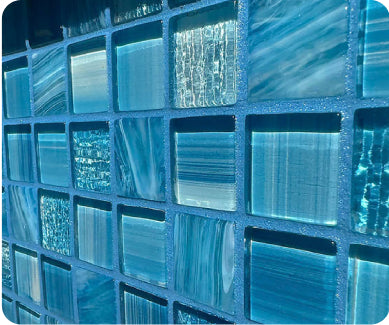
That composition is what gives glass its signature depth. Light doesn't just bounce off the tile, it passes through and reflects back, creating the shimmer and movement you don't get from an opaque material. It's also what makes glass naturally non-porous, so it resists water, stains, and mildew without any extra treatment.
Many of our glass tile collections are made from 100% recycled glass, and the recycled content doesn't compromise strength, color, or durability. It's the same non-porous, water-tight material, just made with a smaller environmental footprint.
How It Becomes the Tile You Install
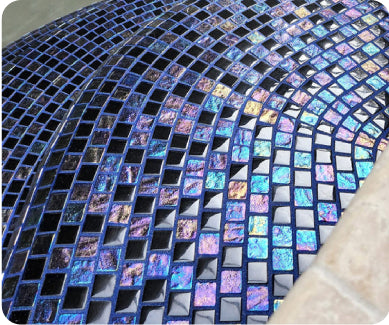
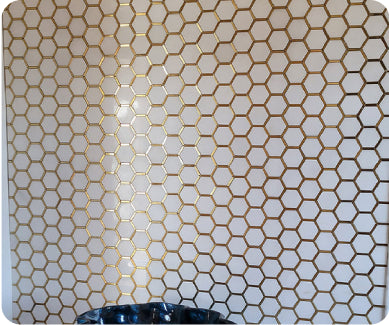
Once the glass is formed, it's cut, polished, or textured depending on the finish, then mounted on mesh, paper, or plastic sheets for installation. Some collections layer in iridescent coatings or metallic finishes during this stage, which is how a single tile can shift color depending on the angle of light hitting it.
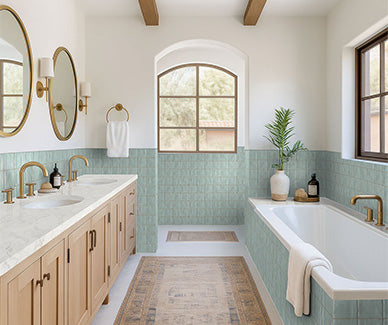
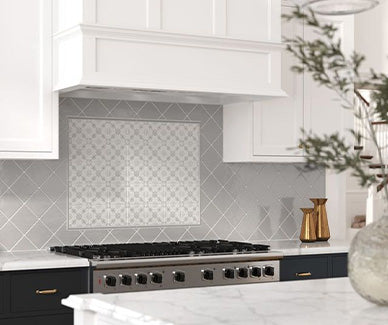
That range is what makes glass such a versatile accent material. The same tile that lines a pool waterline can wrap a shower niche or anchor a kitchen backsplash, carrying that shimmer wherever it goes.
Where Glass Tile Wins
Glass isn't trying to replace porcelain or stone, it does something they can't.
Color and shimmer. Because pigment is built into the glass itself, colors read deeper and more saturated than a printed or glazed surface, and iridescent finishes shift and catch light as you move past them.
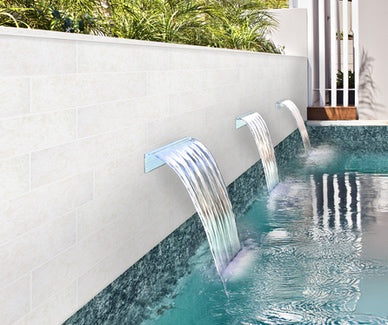
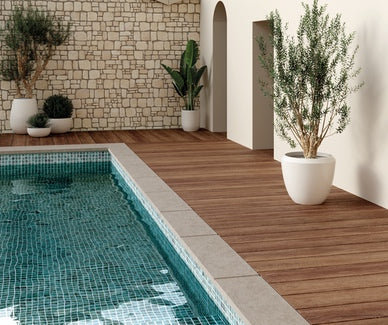
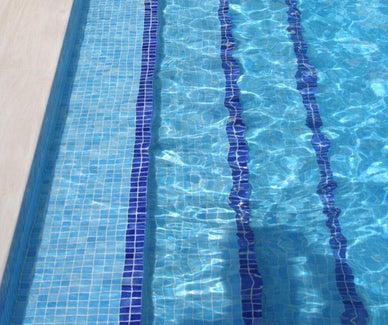
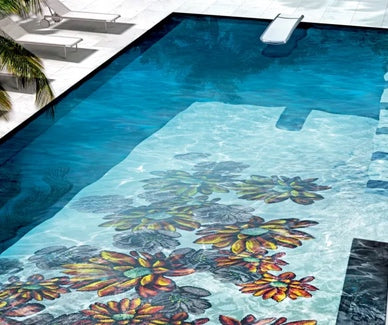
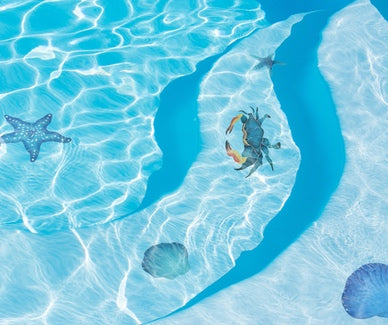
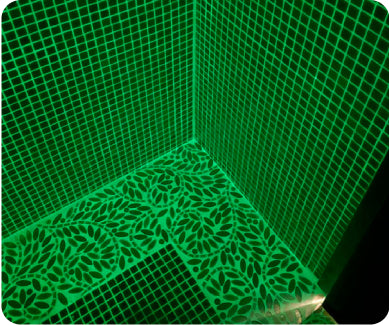
Waterline and pool accents. Pool-rated glass holds its color against sun and chemicals for years, making it the standard choice for waterlines, step markers, and mosaic scenes that need to stay vivid underwater.
Small-format detail work. Glass mosaics flex easily around curves, niches, and borders, so it's the material designers reach for when a space needs a focal point rather than a floor.
Porcelain gives you range and durability at scale. Glass gives you brilliance where it counts.
What to Look For When You're Buying
Pool-rated versus interior-only. Not all glass tile is built for submersion. Pool-rated glass is tested for constant water exposure and chemical contact, while interior-only glass is meant for backsplashes and walls. Check the product specs before it goes anywhere wet.
Mounting type. Face-mounted tile (mounted on paper that's removed after installation) gives the cleanest grout lines, while mesh-mounted tile is faster to install and flexes around curves. Choose based on where the tile is going.
Finish. Matte finishes read calmer and more grounded, glossy and iridescent finishes bring more movement and shine. Think about how much light the space gets before choosing.
Grout compatibility. Because glass is translucent, grout color shows through more than it would with an opaque tile. A translucent epoxy grout preserves that shimmer, while a standard grout can mute it.
Why It's Worth the Investment
Properly installed glass tile holds its color and shine for decades, resists water and chemicals without sealing, and does something no other tile material can: it moves with the light. For anyone building a space meant to feel like an escape, glass is the material that makes it shimmer.
FAQ
What is glass tile made of?
Glass tile is made from melted silica sand with mineral pigments mixed in, then cooled and shaped into tile form.
Is glass tile good for pools?
Yes, pool-rated glass tile is built to withstand constant water exposure, pool chemicals, and sun without fading.
Does glass tile scratch easily?
Glass is durable but can be more prone to scratching and chipping than porcelain, so it's best suited for walls, waterlines, and accents rather than high-traffic floors.
Do I need special grout for glass tile?
A translucent epoxy grout is recommended for glass tile to preserve its shimmer and prevent color show-through.
What's the difference between glass and porcelain tile?
Glass tile is translucent and reflects light for a shimmering effect, while porcelain is opaque and prized for its durability and versatility across floors and walls.
Shop AquaBlu Mosaics Glass Tile
Ready to bring this material home? Shop our glass tile collections and find the finish that fits your space.
