


































Best Bathroom Tile Colors for Small Spaces

Think about the last great resort bathroom you stepped into. Chances are it wasn't huge. It just felt that way, thanks to light bouncing off every surface, a calm palette, and tile that seemed to glow.
The good news is that you can bring that same feeling home, even to a compact powder room or narrow guest bath. The right bathroom tile colors for small bathrooms visually stretch the walls, brighten dim corners, and turn a tight footprint into a little retreat you look forward to every morning.
Here's what works best, why it works, and how to pull it all together.
Light Bathroom Tile Colors Make the Biggest Difference
In a small bathroom, tile covers most of what you see, so its color sets the mood for the entire room. Light bathroom tile colors are the most reliable choice. They reflect light, recede visually so walls feel farther apart, and forgive imperfect lighting.
Keep these in mind as you choose:
- Lighter shades open up the room. Soft whites, creamy ivories, pale grays, and gentle sandy tones pair with nearly any vanity, fixture finish, or paint color.
- Low light needs reflective tile. Bathrooms with small windows or none at all benefit most from light tones in a glossy or glass finish.
- Finish changes everything. Glossy and glass tile bounce more light. Matte adds softness and better grip underfoot.
- Continuity reads as space. Related tones from floor to wall reduce visual breaks and make the room feel larger.

White and Beige: Two Timeless Choices
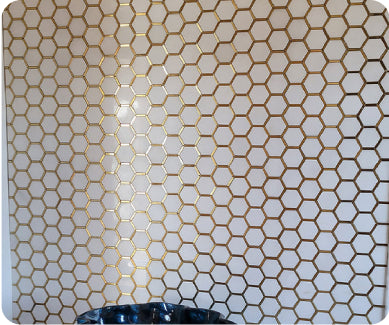
White is the classic for good reason, and beige is the warmer alternative making a well-deserved comeback. Both keep a small bathroom feeling airy, and both can be layered with texture and finish so the room never feels plain.
White bathroom tile creates that fresh, spa-like backdrop you remember from your favorite hotel stay.
- Try subway tile in a vertical stack to draw the eye up, or a herringbone lay for quiet movement.
- Handmade-look and glass tile add depth and shimmer to an all-white room.
- Large-format tile means fewer grout lines and a smoother, more open look.
- Warm it up with wood, brass, or woven textiles so the room feels inviting, not clinical.
Beige bathroom tile brings the warmth of sun-washed sand and natural stone.
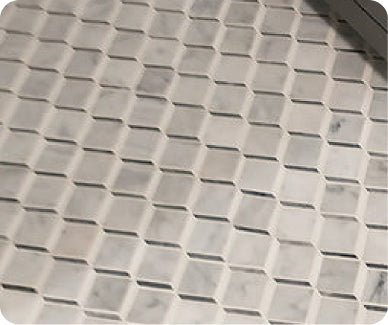
- Look for creamy sand, light oatmeal, and pale travertine-inspired tones.
- Beige is more forgiving of everyday dust and grout discoloration than bright white.
- It pairs beautifully with wood vanities and brushed brass hardware.
- It's a smart pick for bathrooms with cool or limited natural light.

Why Glass Mosaics Make Small Bathrooms Glow
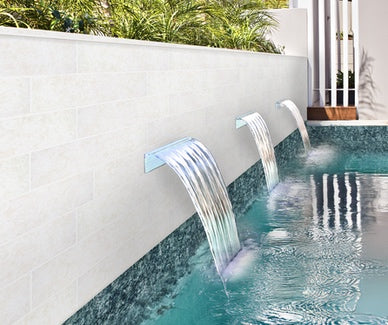
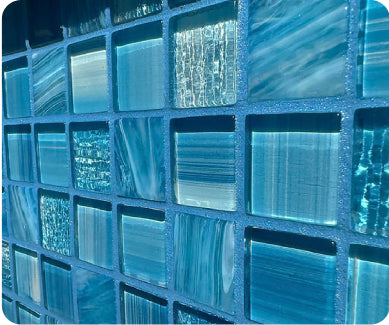
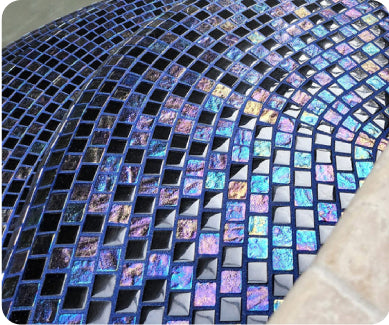
If one material can make a small bathroom feel twice its size, it's glass mosaic tile. Glass doesn't just reflect light, it lets light pass into the tile and catch inside, so walls look luminous instead of flat. It's the same effect that makes a resort pool shimmer at golden hour.
- Maximum brightness. Glass reflects more light than ceramic or stone, which matters most in windowless baths.
- Depth without clutter. Subtle color shifts across each piece add richness while the overall look stays calm.
- Made for wet areas. Glass is nonporous, so it resists water, stains, and mildew in showers and around tubs.
- Easy to scale. Use it on a full shower wall, a backsplash behind the vanity, or a single niche for a jewel-box moment.
Where to use glass mosaics in a small bath:
- A feature wall behind the vanity, framed by plain light tile.
- A shower accent wall or vertical stripe that pulls the eye upward.
- A shower niche lined in a slightly deeper shade for contrast.
Keep the color light or mid-tone across large areas. Pearl white, soft aqua, and pale sea glass tones give you shimmer without shrinking the room.

Coastal Blues: Color That Still Feels Open
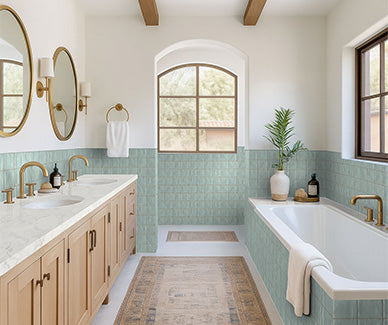
Want color without giving up that airy feeling? Soft blue bathroom tile is the answer. Pale blues and greens read almost like a neutral in a small space, and they bring an instant sense of calm, like a morning at the water's edge.
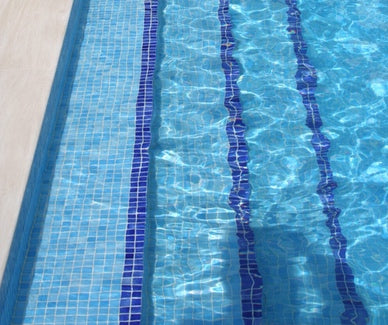
- Sky blue pairs with crisp white and chrome for a clean, breezy look.
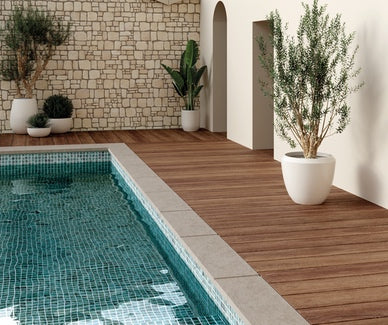
- Soft aqua brings resort-pool energy, especially in glass mosaic.
- Seafoam and sea glass green feel organic and restful next to natural wood.
- Misty blue-gray works for anyone who wants color that stays subtle.
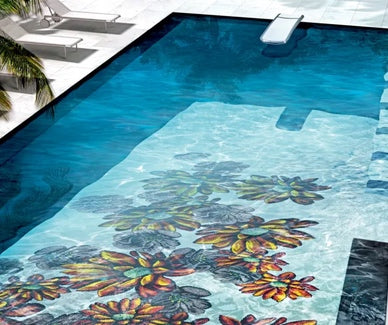
For small bathrooms, keep blues in the lighter range on walls and floors. Save deeper ocean blues for a niche, a border, or a shower floor where they add depth without closing in the room.

Neutral Bathroom Tile Ideas and Small Bathroom Color Schemes
Neutrals go well beyond white and beige. Soft gray, greige, warm stone, and light taupe create a quiet backdrop that lets your mirror, lighting, and fixtures take center stage. Stone-look porcelain adds natural variation so a neutral room never feels one-note.
The secret to a small bathroom color scheme that feels pulled together is restraint. Stick to two or three colors and try the 60/30/10 split:
- 60% light tile on walls and floor
- 30% paint or vanity
- 10% fixtures, towels, and decor
Prefer an even calmer look? Go monochromatic with several shades of one color family. Without hard visual edges, the space flows from floor to ceiling.

Bathroom Tile Color Combinations to Try
Ready to go beyond a single color? These pairings are easy to pull off in a small footprint. Each keeps the room light while adding just enough contrast for depth.
|
Combination |
The feeling |
Pairs well with |
|---|---|---|
|
White + soft aqua glass |
Breezy, resort-inspired |
Chrome, white oak |
|
White + warm gray |
Clean and modern |
Brushed nickel |
|
Beige + cream |
Soft, warm, tone-on-tone |
Brushed brass, walnut |
|
Light gray + white |
Cool and spa-like |
Chrome, marble accents |
|
Pale sage + white |
Calm and organic |
Natural wood, greenery |
|
Greige + warm wood |
Grounded and bright |
Matte black or bronze |
|
White + black accents |
Crisp and graphic |
Matte black hardware |
Rule of thumb: put the lighter tile on the larger surfaces and save the bolder tone for one focal point, like a shower wall, niche, or floor mosaic. With black accents, keep it to a border or floor pattern so the room still feels open.
Glossy, Matte, or Glass? Choosing Your Finish
The same color can look completely different depending on its finish. Here's how they compare in a small bathroom.
|
Finish |
Light reflection |
Slip resistance |
Best for |
|---|---|---|---|
|
Glass |
Highest, with a luminous depth |
Low (walls only, unless rated for floors) |
Feature walls, shower walls, niches, backsplashes |
|
Glossy |
High |
Low |
Walls in low-light bathrooms |
|
Matte |
Soft, diffused |
Higher |
Floors and shower floors |
|
Honed stone or stone-look |
Low to medium |
Medium to high |
Floors and a natural, organic look |
A winning formula for most small baths: glass or glossy tile on the walls for brightness, and matte or textured tile on the floor for safety and grip.
Practical Tips Before You Choose Your Tile
Color is only part of the equation. A few smart choices about samples, grout, and size can make the same palette look larger and cleaner once it's installed.
- Order samples and live with them. Tile shifts under your own lighting, so check samples in the morning, afternoon, and evening. You can order samples right from most product pages.
- Match your grout to your tile. A matching or closely blended grout creates a seamless surface that feels more spacious.
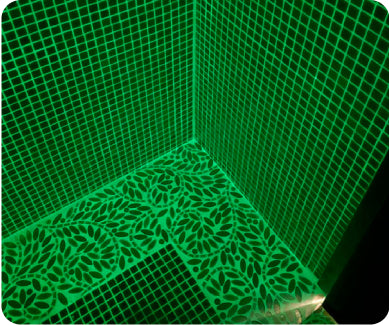
- Think about scale. Large-format tile means fewer grout lines and a more open feel. Smaller mosaics are ideal for shower floors, where they follow the slope and add grip.
- Plan for real life. Very pale grout can show wear in wet areas, so choose a durable, stain-resistant option.
- Choose your finish on purpose. Use the finish guide above to balance brightness with safety.
FAQ
What are the best bathroom tile colors for small bathrooms? Light shades like white, cream, soft gray, warm beige, and pale blue reflect the most light and make a compact room feel open.
Is glass tile good for a small bathroom? Yes. Glass mosaic tile reflects more light than ceramic or stone, which brightens a small space. It's also nonporous, so it resists water and mildew in showers.
Can I use dark tile in a small bathroom? Yes, as an accent. Try a floor mosaic, shower niche, or single feature wall, and keep lighter tile on the larger surfaces.
Do large tiles make a small bathroom look bigger? Often, yes. Fewer grout lines create a more seamless look, especially with grout that matches the tile.
What grout color works best with light tile? Matching or closely blended grout keeps the surface continuous. Contrasting grout highlights the pattern but can make a small room feel busier.
How many colors should I use in a small bathroom? Two or three: one dominant light tile, one supporting tone, and a small accent.
Should I order samples first? Always. Tile looks different under your own lighting, so check samples in your bathroom at different times of day.
Bring the Resort Feeling Home
A small bathroom doesn't have to feel small. Start with a light, calm palette, add a little shimmer with glass mosaics or a touch of coastal blue, and finish with matching grout and the right finish underfoot. The result is a space that feels like your own private spa, every single day.
Explore our glass bathroom tile, white bathroom tile, and blue bathroom tile collections to find your look, then order samples to see how they glow in your own light.
Planning a bigger refresh? Read Bathroom Remodel Ideas That Feel Like a Five-Star Hotel and How Much Does It Cost to Tile a Bathroom?
